There is something wonderfully primitive about splitting logs.
It starts with setting up the block. It has to be on a firm base so the force of the axe transmits through the round to be split, and high enough so the axe handle is horizontal on impact. The rounds must be shifted onto the block as efficiently as possible or my back hurts.
Anne gave me my splitting axe years ago. It’s a bit battle worn, but each year I burnish the Swedish steel and sharpen the blade. It’s a beautifully balanced tool which belies the force it transmits through the logs. I rarely have to cut twice.
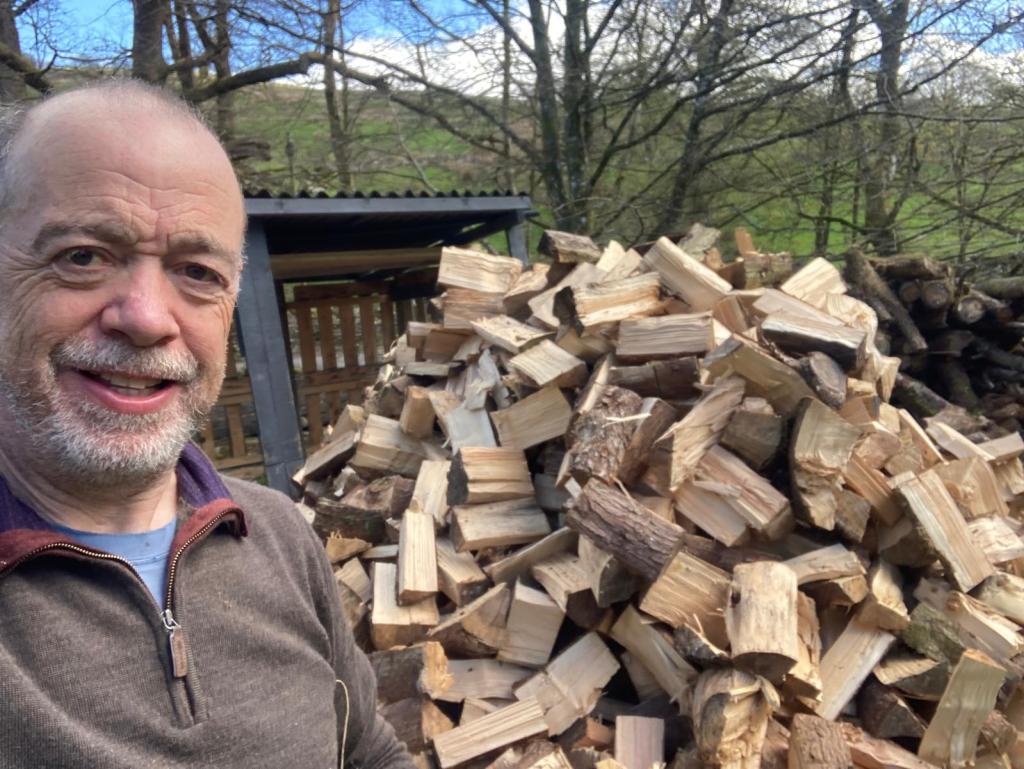
Many of this year’s logs are from ash trees which have suffered die-back. Our valley is being decimated by the disease and there won’t be any shortage of firewood for the next ten years or so. Ash burns really well and happily, the fallen trees are being replaced by a greater number of native broadleaves. There is a real sense of planting for the next century.
I’ve used some of the fine weather to rebuild our decrepit woodstore, so stacking was an even greater pleasure then normal. The split logs are laid bark downwards to enable the maximum moisture to be released from the centre of the log and even spacing makes the woodpile good to look at. Almost too good to burn.
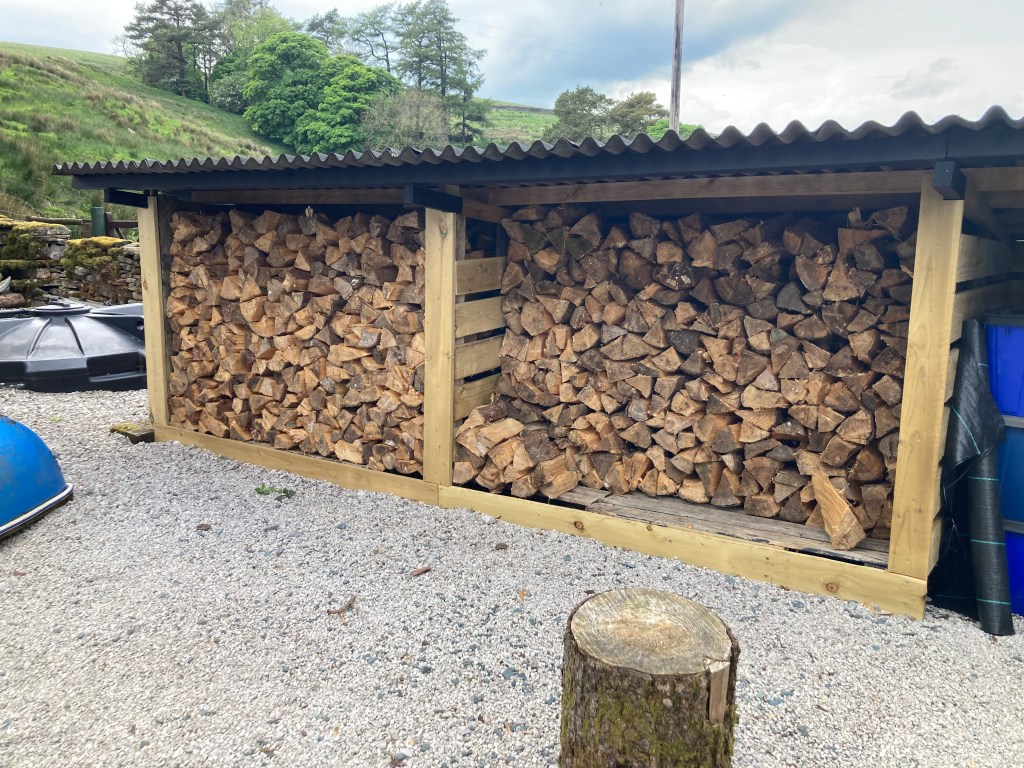
All of which is a way of explaining that I’ve been busy outside the workshop for the last month.
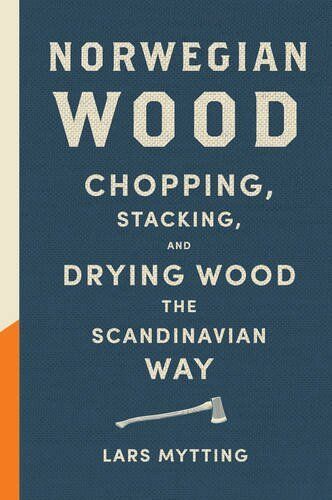
If any of this strikes a chord with you, do read “Norwegian Wood” by Lars Mytting, published by Maclehose in 2015. It is a funny, uplifting and unlikely best-seller which describes the history, artistry and techniques of the woodpile.
 Andrew Fleck Furniture Design